A year ago I had no plan to become a content creator.
I wasn't building toward this. I wasn't working on my dream. I was just trying to get through the week.
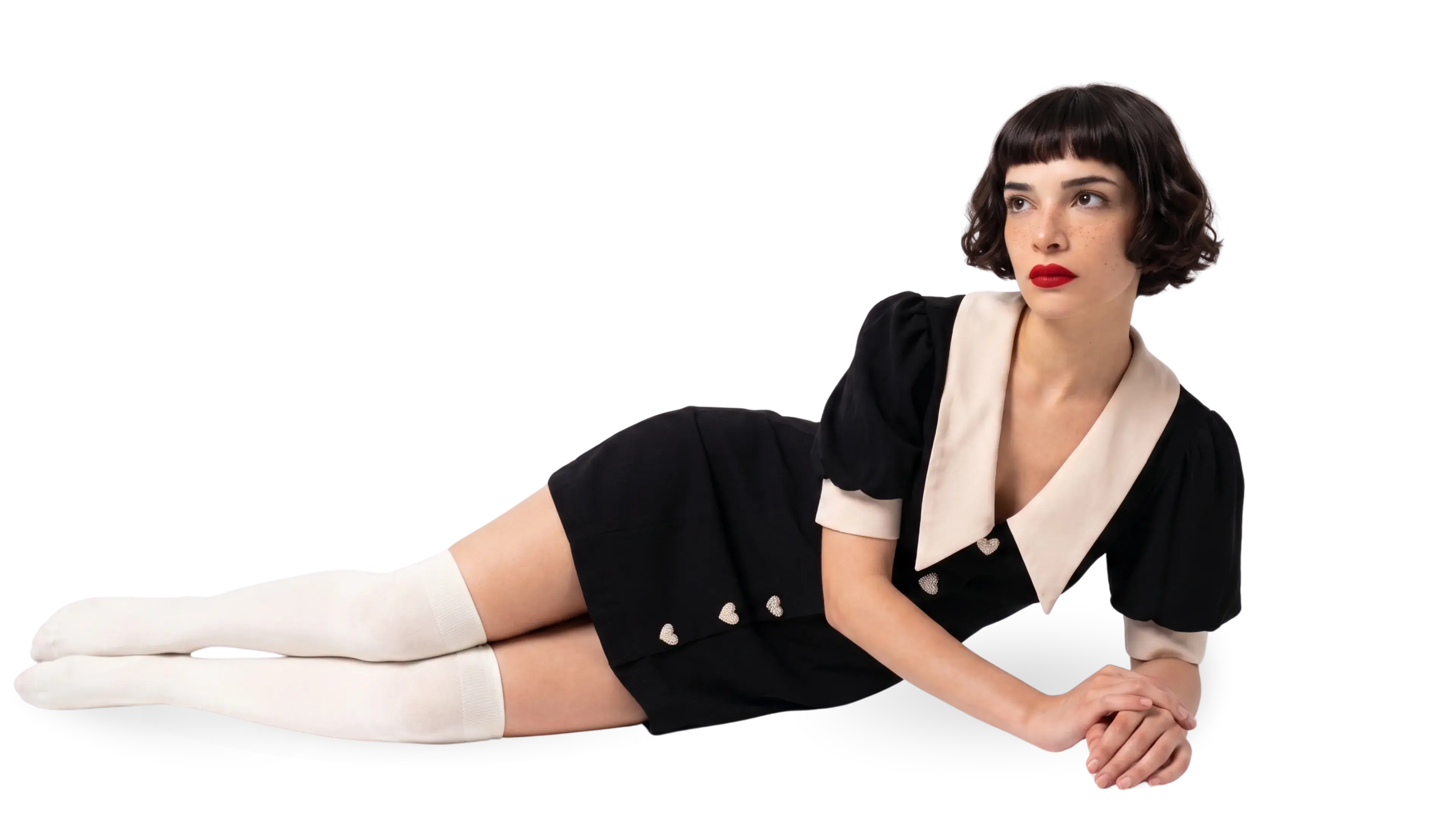
I was not supposed to be here.
Let me be honest with you about something. A year ago I had no plan to become a content creator. I wasn't building toward this. I wasn't working on my dream. I was just trying to get through the week.
I'm Anamaria. I'm 25, I live in Rustavi with my husband and our three cats, and until pretty recently my life looked completely ordinary. Maybe boring, depending on who you ask.
I went to university to study pedagogy because it seemed like the responsible thing to do. Education felt safe. Respectable. The kind of path nobody questions. About halfway through I realized I was performing a life that wasn't mine, and I dropped out. That's not as dramatic as it sounds. It mostly felt like quietly admitting something to myself.
Then came the regular jobs. A pet store first. Later a call center where I worked as an operator for an intercom company. If you've never done call center work, the short version is this: you answer the same problems over and over, your shift eats your day, and by the time you get home you have just enough energy to cook something, scroll your phone, and sleep. Forty hours a week. Sometimes more. And nothing left over for anything else.
I used to think about the math of it. Forty hours of work. Sleep. Cooking. Recovery. Where was my actual life supposed to fit?
June 2025.
I didn't quit my job and dramatically pursue content creation. That's the version that would make a nice movie. What actually happened is I got curious.
I'd been watching a lot of short-form content and noticed something. Most educational videos were either boring lectures or polished-to-death productions with no soul. There was this gap. Nobody was making educational content that felt cinematic and emotional and a little bit mysterious. The way a good documentary feels, but in 60 seconds.
So in June 2025 I posted my first video. About what, honestly, I don't even remember. Some weird historical fact or a strange psychological phenomenon. I filmed it on my iPhone 11, rear camera, propped on a stack of books by the window for natural light. No tripod. No microphone. I recorded the voiceover on my phone's voice recorder and synced it later in CapCut, which I was teaching myself by trial and error.
This was not glamorous. I want to be clear about that. If you came over to my apartment that month you would have seen a woman talking to a phone balanced on a stack of cookbooks. That was the whole production setup.
What happened next.
I kept posting. Some videos did nothing. Some did okay. I didn't have a formula yet. I just kept making them.
A few things slowly clicked. The first three seconds of a video matter more than the next sixty combined. Subtitles aren't optional. Background music does emotional work that words can't. Simple cuts beat flashy transitions. The atmosphere of a video matters more than the budget. I figured all of this out by doing it wrong first.
I also started developing what I now realize was a brand without trying to. The red lipstick. The French bob. The dark, slightly mysterious aesthetic. The atmospheric music. The alternating between me talking to camera and B-roll. None of this was a strategy at first. It was just what felt right. By the time I noticed it, people were recognizing me by it.
Within a few months something shifted. Videos started consistently doing well. The TikTok account crossed thousands of followers, then tens of thousands. Facebook caught up. Instagram followed. By the time I'm writing this, the numbers are roughly 73,000 on TikTok, 20,000 on Facebook, 10,000 on Instagram. All organic. No ads. No promotion budget. No team.
The brands.
The first brand reached out and I almost didn't believe it. I had been too scared to message brands myself, because I felt "not big enough." Then they messaged me. Then more of them. Then the paid promotions started landing in my inbox regularly, and somewhere in there I realized this had stopped being a hobby.
I eventually hired a manager to handle brand communication, which was a strange thing to type the first time. I'm 25 and I have a manager. Okay.
When the income from content became more reliable than my call center salary, I left the call center. I'd be lying if I said this wasn't terrifying. Leaving a steady paycheck for something that depends on an algorithm is not a normal financial decision. But it's been one of the best calls I've ever made, and I'll tell you why. It gave me back my time. My schedule. My creative control. The thing I was missing during those 40-hour weeks. The thing the math wasn't adding up to.
The English experiment.
I had a nagging question I couldn't shake. Was any of this real? Did I actually figure something out, or did I just get lucky in a small market?
So I started a second account in English to find out. No existing audience. Cold start. Same approach.
The videos hit immediately. Multiple of them landed between 10k and 50k views within the first weeks. One of them reached somewhere between 3.5 and 4 million views. From a brand new account in a language that wasn't even my first.
That was the moment it stopped feeling like luck.
What I actually believe.
I think most people overthink content creation into the ground. They wait to buy the right camera. The right lighting. The right course. Meanwhile someone with worse equipment and less knowledge posts every day and grows past them in six months.
I think attention is the only currency online and most creators are bad at protecting it. I think audiences have outgrown the "99% of people don't know this" hook formula and the algorithm has too. I think the front camera on every phone is worse than the rear and people who know better still use it anyway. I think most cinematic, expensive-looking content underperforms because it forgot to be interesting.
I think you can learn editing software in a week if you stop reading about it and start clicking buttons. I think AI is great for research drafts and terrible for final writing. I think you should verify every source AI gives you. I think 15 minutes of natural daylight beats a $400 lighting kit.
“Good enough and posted today beats perfect and posted in three months.
”
Why I'm building this.
I'm not here to sell you the dream of getting rich on TikTok. I'm here because I learned a real system, by doing it wrong for almost a year, and I'm a little annoyed by how much fake content creator advice exists.
If you're reading this and your life looks like mine did in early 2025 — regular job, no plan, vague curiosity about making something — I want to tell you the boring true thing. You don't need permission. You don't need equipment. You don't need a strategy document. You need to post the first video. Then the second one. Then keep going while everyone else is still researching.
That's the part nobody tells you, because it's not exciting enough to sell. But it's the part that actually worked.